
Acceptance & Commitment Training for Coaches
When Insight Isn’t Enough
ACT Skills for Coaching Through Stuckness and Complexity
Acceptance and Commitment Training (ACT) for Coaches
A research-supported approach used across healthcare, leadership, and performance settings
Tuesday, September 15 | 11:00 AM – 3:00 PM ET
4-Hour Live Online Workshop
4 ICF Continuing Coach Education (CCE)
Part of the ExpansiveCoach™ Professional Education and Continuing Education Series
Co-led by
Jory Stillman, MA, MCC — Founder, ExpansiveCoach™
Dan Brown, MS, BCC — Creator of BLADE™ and author of UnOffendable™
A Moment Many Coaches Recognize
Many coaching conversations reach a point where insight alone does not lead to movement. The client understands the situation, can describe the options, and they may even know what matters.
And still, something holds them in place. The same thoughts repeat, and emotions surface that neither of you wants to bypass.
Values pull in different directions, and action feels uncertain.
In these moments, more analysis or motivation rarely helps.
What becomes more useful is the ability to work skillfully with the client's internal experiences, shaping their choices in real time.
This is where psychological flexibility becomes essential.
What is Acceptance and Commitment Training (ACT)?
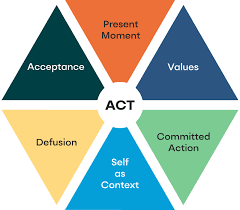
Acceptance and Commitment Training (ACT) is an evidence-based behavioral approach that helps people respond more flexibly to thoughts, emotions, and internal experiences.
Rather than trying to eliminate discomfort or fix thinking, ACT supports people in staying present, reconnecting with what matters, and taking meaningful action even when uncertainty remains.
At the core of ACT is psychological flexibility:
The capacity to remain present with thoughts and emotions while continuing to choose actions aligned with what matters.
For coaches, ACT offers a practical way to work with the moments where thinking, emotion, and decision-making intersect.
The EXPANSIVE™ Approach
Within the Expansive™ Approach, coaching attends to the full human experience that appears in leadership and life decisions:
Thoughts. Emotions. Values. Embodied awareness. Real-world constraints.
Rather than rushing toward solutions, this approach creates space for clarity to emerge through reflection, presence, and values-aligned discernment.
ACT strengthens this way of working.
It provides an evidence-informed structure that supports coaches in staying present, working skillfully with internal experience, and helping clients move forward without forcing resolution.
What You Will Walk Away With
• understand psychological flexibility and how it shows up in coaching conversations
• recognize when a client is caught in patterns of thinking or avoidance
• use language that helps clients step back from thoughts without debate or reframing
• reconnect clients with values when decisions feel unclear
• support meaningful action without pressure or urgency
Why This Work Matters Now
Coaching is evolving.
Clients are navigating increasing complexity, uncertainty, and pressure. Many are looking for approaches that go beyond insight and support meaningful, real-world change.
As a result, there is a growing expectation that coaching is not only thoughtful and relational, but also grounded in approaches that can demonstrate impact.
Acceptance and Commitment Training (ACT) is among the most widely researched behavioral frameworks for building psychological flexibility — a capacity linked to improved resilience, decision-making, and adaptive behavior.
For coaches, this means having a way to work with the internal experiences that often shape outcomes: thought patterns, emotional responses, values, avoidance, or hesitation
This is where ACT becomes especially relevant.
It provides a structured, evidence-informed way to support clients in moving forward, even when clarity is incomplete.
Where Coaches Use These Tools
These tools are especially useful when clarity is not immediate, and the client’s internal experience begins to shape the conversation.
For example, when a client:
understands the situation but remains stuck in repeating thought loops
is facing competing values with no obvious path forward
becomes caught in self-doubt or inner criticism
knows what they “should” do but cannot move toward it
is navigating a transition where identity or priorities are shifting
feels pressure to act quickly in a moment that requires reflection
is experiencing emotions that influence how they see the situation
In these moments, coaching is not about removing discomfort. It is about helping the client slow down, reconnect with what matters, and choose a next step from that place.
What Coaches Notice After Learning ACT
Many coaches find that something shifts in how they show up.
They feel more comfortable staying present when emotion surfaces.
They recognize entanglement more quickly.
They help clients create space rather than push for answers.
Conversations begin to open again.
And perhaps most importantly:
They feel less pressure to fix and are more confident in their ability to stay with complexity.
Research on psychological flexibility suggests this shift matters.
When people respond more flexibly to thoughts and emotions, they are more likely to move toward meaningful action even in uncertain or challenging circumstances.
ACT Training for Coaches
What the Workshop Includes
This 4-hour live workshop is designed for both understanding and application.
✓ Focused Teaching
Clear explanation of psychological flexibility and ACT in a coaching context.
✓ Live Coaching Demonstration
Observe how ACT-informed coaching unfolds in a real conversation.
✓ Structured Observation
Learn to recognize where psychological flexibility expands or narrows.
✓ Triad Coaching Practice
Practice in small groups with structured roles and observation prompts.

How This Work Aligns With the ICF Core Competencies
The practices in this workshop strengthen how coaches show up in moments where conversations become complex, uncertain, or emotionally charged.
This work naturally supports several ICF Core Competencies:
Cultivates Trust and Safety (4)
Clients are supported in bringing forward what is real, without needing to manage or minimize their experience.
Maintains Presence (5)
Coaches develop the ability to stay grounded and responsive, even when there is no clear path forward.
Listens Actively (6)
Listening expands beyond content to include patterns of thinking, emotional cues, and shifts in energy.
Evokes Awareness (7)
Clients begin to see their thoughts and reactions with more distance, opening space for new perspective.
Facilitates Client Growth (8)
Clients are supported in taking meaningful action aligned with what matters, even when clarity is still emerging.
This is not about adding more technique. It is about strengthening presence, partnership, and the ability to work skillfully in the moments where insight alone is not enough.

Who is this for?
This program is designed for:
• professional coaches seeking ICF continuing education
• experienced coaches who want tools for complex coaching conversations
• leadership or internal coaches supporting decision-making under uncertainty
No prior experience with ACT is required.
Continuing Coach Education
Total Contact Hours: 4.0
ICF Continuing Coach Education (CCE)
Core Competency Hours: 3.5
Resource Development Hours: 0.5
Faculty
Jory Stillman, MA, MCC
Founder of ExpansiveCoach™ and Master Certified Coach with more than 5,000 coaching hours. Works with leaders and coaches navigating complex decisions, transitions, and meaningful life questions with clarity and steadiness.
Dan Brown, MS, BCC
Board Certified Coach, creator of BLADE™, and author of UnOffendable™. Focuses on helping leaders and teams remain grounded, clear, and effective under pressure.
Together, they integrate behavioral science, leadership development, and practical coaching application.
Workshop Details
Date: Tuesday, September 15, 2026
Time: 11:00 AM – 3:00 PM ET
Format: Live Online (Zoom)
Join Us
f you want to work more skillfully with uncertainty, emotion, and complex coaching conversations, this workshop offers a practical place to begin.
If This Feels Like the Right Next Step
Questions before registering? Feel free to reach out here.
Otherwise, you’re welcome to join us!